London College of Printing
In 1988 I moved into what was once called Princes Meadows – the part of Waterloo around what is now Hatfields and Stamford Street. There was still the remnant of the print trade existing with Mirror newspaper paper lorries leaving what is now the Gym building on the corner of Cornwall Road. In 2007 IPC Magazines moved out of Kings Reach Tower on Stamford Street to the Blue Fin Building on Southwark Street. More recently The Racing Post and Hello Magazine moved from Canary Wharf to Stamford Street maintaining historical links with “The Print”.
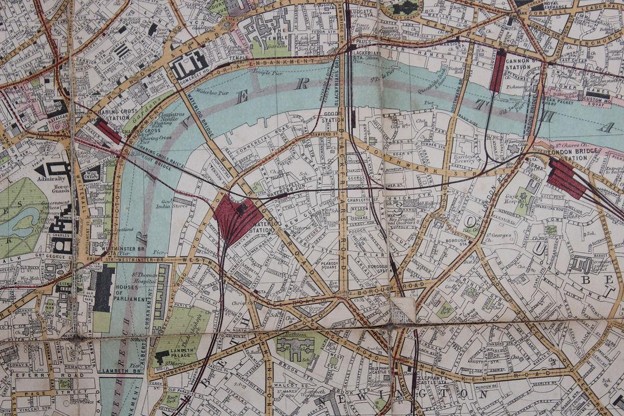
The housing co-op I moved into was built on the site of Clowes Print Factory and much later I was to learn that The London Nautical School that had originally been built as a school for the Benevolent Society of St. Patrick was bought by the London County Council in 1921 and became the London College of Printing
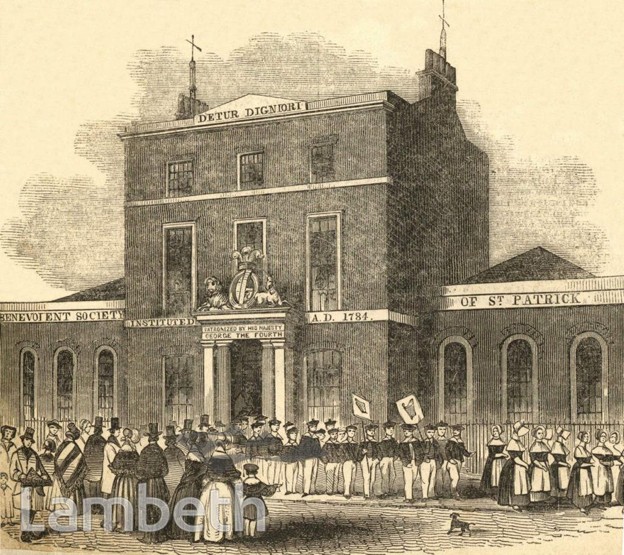
The Benevolent Society of St. Patrick was founded in 1783 in response to the increasing destitution of Irish persons travelling to seek a new life in London. The well heeled founders had a humanitarian cause against the backdrop of political unrest throughout Europe, seeking to work and make the best of their Irish Estates.
You can read more about this via this article on JSTOR, or here.
The London College of Communication was formed in 1990 by the merger of the College for Distributive Trades with the London College of Printing. It forms part of the University of the Arts at the Elephant and Castle campus: a site opened in 1964. Saint Bride Foundation Institute Printing School opened in Saint Brides Lane in 1894. It moved to 61 Stamford Street, now the Nautical School.
The roots of the London College of Printing (LCP) lie in the City of London Parochial Charities Act of 1883, which determined to improve management of these charitable funds, and thereby benefit the people of central London by improvement of education and employment prospects. The need for improved technical education of workforce was clearly felt against a background of changing technologies and foreign competition, and particularly so in the field of printing. THE LCP also had premises in The Cut, probably the site that became Southwark College.
Read more about this here. You can jump to Nos. 59 and 61. You can also access the archives of The London College of Communication here.